
To save games, we have to build new local ecosystems
The games industry is in crisis. Last year 10% of developers were laid off, while startup funding evaporated by 77%. This year has been worse, with foundational “resets” in gaming investments from major players like Microsoft, Tencent, and Meta resulting in major studio closures. Something is breaking, but there isn’t consensus on what is happening, why it is happening, nor how the future can be shaped into something sustainable. I don’t have all the answers, but I do have a theory that links the various arguments I have heard from developers, studio heads, publishers, and investors over the last four years.
The industry is crashing because we have consolidated the ecosystem into a monoculture where each release has to compete against every game in the world through narrowing market channels. This is not just “oversaturation”; there are more people playing games than ever, but they are playing a shrinking number of releases. This means that the winners score bigger jackpots, but there are more losers who take home nothing. At the same time, old formulas for success no longer work – so hitting the jackpot doesn’t create a pathway to sustainability. As long as every game has to stand on top of the world or be crushed by it, we will see dramatic rises and falls that will eliminate the class of professional craftsmen that can only develop from experience gained in sustainable environments.
The only way out of this maelstrom is to break the walk towards monoculture. We must develop new subcultures for buying and selling games.
Monoculture is the consolidation of once disparate markets. Platforms now resemble each other in features and content – controllers have been standardized, graphical differences are indistinguishable, physical releases are phased out, multi-platform releases are the norm. Xbox doesn’t just compete with Playstation for platform dominance, now Xbox games compete with Playstation games for attention on Steam. Monoculture is not just releases, though, but the methods available for marketing these releases. The games media landscape has been deliberately decimated along with most other forms of boutique media. We are without many magazines and blogs where prospective players go for one thing, and discover other new things along the way. Human curation has been increasingly replaced with algorithmic filtering that just further surfaces what is already popular.
We have gotten used to believing that taking over the whole world is a good thing – who doesn’t want their game to be popular? – but building the pathways towards that homogenization has put us into this mess.
There are many other popular talking points about why this crash is happening, all of which are based on truth, but I believe they are all symptoms of this larger sickness of monoculture. To explain further what I mean by monoculture, I’ll run through these other talking points and explain why any solutions to these various ailments won’t be enough to fix the industry. Then I will explain the type of solutions I think need to actually be taken to build new sustainability.
Industry Crash Theory #1: Post-COVID Recalibration
During COVID lockdown people played more games, so publishers spent more money to capitalize on the expanding market. Low interest rates made borrowed money cheap, which encouraged speedy greenlights for expensive projects by new developers. Then the lockdown ended. Now, people are buying less videogames, resulting in less money than there are professionals. Interest rates are up, so financers can’t take risks and need a return on their investments. Funding is cut, projects are cancelled, developers are laid off, and studios are closed as a natural calibration to the smaller market, adjusting after an artificial and temporary surge.
This is a very tidy explanation, but if it was the only story then the recalibration would have been swift and singular. We were too big, now we are smaller again, back to business as usual. This was a naive but understandable expectation in 2023, but three years later it cannot justify the existential panic demonstrated by major platform holders and publishers as they scramble to come up with new corporate strategies.
What COVID did was it accelerated the monoculture. Want a game? Go to Steam, no trading with a friend or browsing local shops. Want to play with people? Join a Discord, and good luck introducing anyone to something unfamiliar. Want a new friend? Watch YouTube or Twitch, parasocial connection is the best you are going to get.
Journalism, magazines, and anything else that made up a subculture buckled under an isolated online world. The algorithm didn’t curate, it just disseminated the most popular stuff. Everyone who wants a game goes to Steam and sees the front page. What goes on the front page? The most popular thing in the world. What becomes the most popular thing in the world? Whatever the streamers are playing. What are the streamers playing? They play whatever the most popular streamer is playing – after all, that’s the only person who can make a living streaming. An iceberg balancing on the tip of an iceberg. Sucking on the world through the straw of your 13-inch laptop monitor.
Industry Crash Theory #2: Games are sold for too cheap
This concern comes in many flavors. 99¢ games on the App Store destroyed the value of mobile games; Steam sales trained audiences to wait for steep discounts; Xbox Game Pass cannibalized sales. Accessible development tools have made it too easy for low-skill developers to flood storefronts with cheap crap. On top of it all, game prices stayed the same for two decades while inflation rose. Any of these factors are used to argue the conclusion that somehow we have to get audiences on board with game prices going up, or concoct new schemes for microtransactions / subscriptions / ad integration.
Devaluation occurs when there is oversaturation, but that oversaturation is further problematized when disparate markets merge audiences. The oversaturation of Atari cartridges that caused The Videogame Crash of 1983 only mattered in the United States, whereas Europe and Japan were unaffected. Similarly, Apple standardizing 99¢ phone games didn’t affect the console or PC space at the time, because the mobile ecosystem was so divorced from “the videogame industry” that it had different developers, audiences, conferences, journalism, even scholarship. What is new is that platforms have been trying to meld these different markets together – God of War on Steam, Resident Evil 7 on iPhone, Red Dead Redemption on Netflix (really!). This march towards homogenizing markets was a key motivator for the Epic v Apple antitrust lawsuit. Media giants are battling to build and control whatever could become the digital portal where the world goes to play any and all videogames. It’s a cynical calculation that whoever owns the monopoly on the monoculture is the only one who wins from oversaturation, while developers vie for their 15 minutes of fame.
A singular market is doomed to crash totally. The benefit of having a network of different ecosystems is that if one starts to buckle, the developers can translate their skill to adjacent markets. This keeps experience in circulation, and increases innovation as ideas carry from one subculture to the next. Imagine if the 1983 game industry crash had reverberated outside the USA? Nintendo would have never entered the console market.
Industry Crash Theory #3: Games cost too much to make
When Insomniac Games was hacked in 2023, some existential questions leaked too. Spider-Man 2 cost almost three times as much as Spider-Man 1 to develop. Internal documents asked, “is 3x the investment in [Spider-Man 2] evident to anyone who plays the game?” There is no world where the game would sell three times as much as its blockbuster predecessor, and expecting it to do so is laughably outrageous. But get a few drinks with AAA game developers and you will hear some variant of this story. Budgets have ballooned, but quality is elusive. To players, it has not become obvious that the largest studios are struggling to release more than one game during a hardware generation.
The studios and their budgets have been bloated with inefficiencies. Greedy and lazy developers have to learn to do more with less. Austerity is the reckoning for a pipeline that was too generous and soft. For a company to compete today, they need to be nimble and lean.
That’s a harsh scarecrow reaction, but as with all these theories I think there is a degree of truth to it. If we compare the development environment of today with the 90’s and 2000’s it feels like a different planet. How much they accomplished with so few people, such rudimentary computers, and so quickly! Up to Grand Theft Auto IV, Rockstar averaged a major GTA release every two years. GTA VI, on the other hand, has taken 13 years to make. How many copies will it need to sell to be considered a success against its $2 billion budget? And how much can that audience grow, if their target demographic of 17-year olds were infants the last time a GTA came out? Even if it is a success and the most profitable media release of all time, I suspect there will never be another game made like GTA VI. It is the end of the line for this style of blockbuster game development, like Cleopatra was for the opulent 60’s roadshow film system.
How did we get here? It would take several other chapters to dig into the technical reasons why HD graphics have outsized costs, or how big box engines increased production problems rather than streamlined them. Those are worthwhile problems to investigate, but above any technical reason is a historical narrative that has guided publisher decision making until this point.
Games are a hits driven business, but there was a period of time where it was possible to forget this. During the “console wars” between Microsoft, Sony, and Nintendo around the sixth and seventh generation, platform holders split the market between cheap indies that could flesh out their catalogues and their own big AAA game launches. There was a wide gulf between the two – an indie developer couldn’t dream of matching the technical sophistication and visual splendor of the AAA releases. What players called “real games” required hundreds of expensive specialists to produce, and there were only a few of these big games released a year, so the competitive field was relatively lean. AAA games became a formula, and we all know the beats: first-person or over-the-shoulder camera, narrative delivered through voice-over, skill trees and ability/weapon unlocks, photo-realistic lighting. Assembling a AAA team was hard, but if a publisher could do it then the math was simpler than it is today. Put more money in, more money comes out. If the game had cutting edge technology and looked better, people would show up.
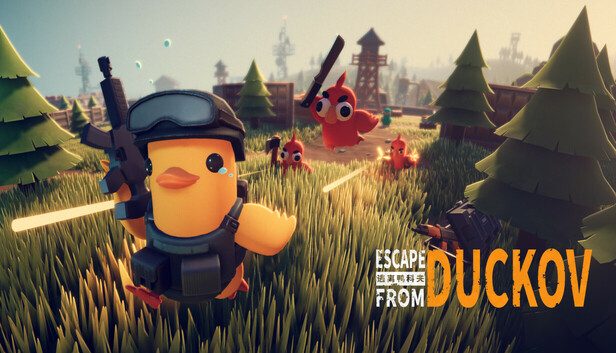
This market split had dissolved by the time the PS5 released. Mid-sized studios can now meet the expectation of “real games” because the genre signifiers are baked into the big box engines. Physics, controls, and lighting in Unity and Unreal are industry standard whether you are on a team of two or two hundred. This has eroded the market split that platform holders initially cultivated. Sony funded Journey and other indies because the expensive PS3 was struggling to gain a market share, and indie darlings created cool, sophisticated branding that drew in savvy players. AAA publishers benefitted from indie releases because indie game players weren’t casuals – they were the most hardcore part of the audience, and continued to purchase AAA games on their platform of choice. But in today’s world why buy Sony’s Marathon (peak 88k concurrent Steam players, dev team of 400+) when the same platform has Escape from Duckov? (300k peak concurrent Steam players, dev team of 5)
There was another generation shift that eliminated the indie/AAA market split – Gen Z aged into the primary gaming audience. They are a generation that grew up during COVID lockdown, and hanging out after (or during) school meant playing cheap online games together. For them, videogames mean Minecraft, Roblox, snake.io, Among Us. Graphics are low value for this generation. What they play prioritizes sociability, easy access, and low-stakes situations. This is antithetical to the hardcore AAA game model, which prioritizes individual immersion and deep systems for prolonged progression loops. As Gen Alpha ages, this shift will become even more pronounced.
Without the market split, legacy studios are no longer fighting the 2010’s AAA war – they are now in the mud with all the indies. While we can recognize in retrospect why “Friendslop” resonates with Gen Z players, indie devs operate out of luck more than strategy. Peak’s success was an accident – the hits we see are simply the 1 out of 10,000 developers who have sacrificed their life savings to take a shot at making something. When an indie developer fails, they disappear invisibly, so we can’t chart the toll. Now that large studios are fighting on those same terms, everyone can see how often and how devastating release failures can be.
Indie development has always been about forming a garage band, where just a handful become superstars, and many die young. Now that the market has coalesced, the largest players have become garage bands with 400 musicians.
Industry Crash Theory #4: Lack of technical innovations
The current generation of consoles fail to transform the way people play by not offering any novel technology, so players haven’t gotten on board. Maybe if these big publishers released some truly innovative games that wow us like they used to, they wouldn’t be in this mess. I think that this argument resonates emotionally with many people. It feels true! I love my PS4, but I never upgraded to PS5, even though I have credits on a few titles for the system. Everyone probably has some form of feeling: “This was going to be the future. I thought I would care more about it than I do.”
Blaming lack of innovation is a very “End of History” type of claim. Everything that could be tried, has. It assumes that games are subject to carcinization – the theory that multiple different species independently evolved into what we recognize as the crab, which is an idealized form for their environment. But if all games are turning into crabs then they must be sharing the same sea – a monoculture.
When games have to compete for the same global market they can’t afford to have any idiosyncrasies. The algorithm ensures that survival depends on popularity – everyone either loves your game or they won’t even see it. Any game that tries to appeal to any one person’s individuality will necessarily alienate other people, and risk dooming the game’s discoverability. This is true of all art, but especially true of games because they are a behavioral medium. If a player does not understand how they are supposed to play, the game comes to a halt. If you are trying to build depth you have to trust that your audience has some familiarity with your genre space or cultural background, so you can use shorthand to jump past tedious introductory concepts and take players to new places.
The best game you have ever played is the best game for you because it speaks to something deep and personal. Sharing that game with others can then be an expression of yourself. Let’s play together, and understand each other. More and more this intimacy will be lost, as subcultures are subsumed by monoculture.
Going back to console hardware, we can agree that the Nintendo DS was an innovative console. Foldable screen, microphone, touch controls before the iPhone. Now, Nintendo’s new console is basically just a larger version of its decade old last console. What happened to innovation? The monoculture killed it. The Nintendo DS was experimental because it was not developed to replace the GBA, and Nintendo’s business was supported by both home console and handheld ecosystems. Nintendo was prepared for the DS to fail. Instead, it became their best selling console. However, after the Wii U failed Nintendo consolidated their market into a single ecosystem.
The Switch is the perfect emblem of a monoculture. Now you can play your games on the big screen, in bed, and on the plane. With developers no longer split between two systems, the release cadence doubled. Everything seems great, but oh no– now if the successor changes anything too much, backwards compatibility is no longer an option and Nintendo risks losing their only audience. When the 3DS had a rocky start, there was still the Wii, and when the Wii U bombed, the 3DS had become strong enough to buoy the company. The Switch 2 has had a respectable start, but is the future just shinier versions of old games? If the Steamdeck and next Playstation and Xbox consoles are Switch-likes, what does it matter what game is released on what? When every console is the same then every game will be the same.
The ice caps will melt, the world will be submerged, and we will all become fish who don’t know we are in water. When that happens, we will only hunger for the taste of crab, because it will become all that we know, even as we are sick of it.
Another crab’s treasure…
A hits driven business means one in ten releases is a success, but that one success is enough to make up for the nine duds. Now let’s say your game hits it big. Top game on Steam, movie stars are referencing it, TikTok memes are blowing up. For the sustainability of the industry, what is the best thing you can do next? I want you to think about this question before moving on. Really try to imagine what you would do in these shoes.
Under the current model the best case scenario for the industry as a whole is that when a studio hits a jackpot they use the winnings to fund multiple other studios. This is what Inner Sloth did with Among Us’ surprise triumph, but even when they fund 22 studios to release new games, each release is still competing against a hundred thousand other releases. Those studios get to take a dart toss, but when 20,000 darts are thrown a year, their chances of a hit remain grim (especially since this particular deal includes no marketing). Without consistent revenue these studios will likely be short lived.
There is no sustainability possible in a monoculture. So we must break from our habits. No one will be saved by researching trends, min-maxing Steam sales, sim-shipping on every platform in every language, or using AI to speed up coding or art or any of the other worthwhile parts of making things.
What can be done?
We have to invent new local ecosystems. Games for a small, dependable audience. Farm to table games for your neighborhood market, metaphorically and literally. A friend was telling me about the community of doujinshi game makers, and how it is a completely separate ecosystem from the Japanese “indie games” scene. Instead of trying to chart on Steam, doujinshi games are sold alongside zines and comics in festivals. They know their small audience, and the audience shows up for them. There is not the same festival culture in the States, but if there was one single model for local ecosystems then they wouldn’t be local, would they? So the challenge is for us developers to connect more deeply with the people we know, and make art not for the nebulous idea of “the whole world” but for the ties we know are strongest.
It will not be easy to shift lifestyles and skillsets for this change. In the detritus of the AAA industry is a professional class that was handsomely rewarded for developing hyper-specific skillsets. Environmental Collision Designers, Cloth Simulation Engineers, Technical Lighting Artists. These skills are valuable in concert with a large team of other specialists. It will be daunting to train additional skills needed to make smaller games for less money. But for the sake of the industry, we have to find the things we can do that no one else can, and make things that the people we know will care about.
We can see how some developers have carved new ecosystems for themselves where none existed before. Games are now key features of sites like the NYT, LinkedIn, The Atlantic, and countless others. They each have idiosyncrasies that line up with their audiences; NYT has word games, LinkedIn has logic puzzles, The Atlantic has history games. Or go to a museum and spend some time with their digital kiosks. Some of the games have gotten pretty good! Or how about this: there’s a bar in Koreatown here in Los Angeles called “Chi Chi” that has tablets set up on each table with networked games you can play with all the other tables to wager drinks and flirt through their chatrooms.
Games can be anywhere. We make games because we believe computers can be fun, that systems can create joy, and people can connect through play. So long as we are surrounded by computers, systems, and people, there will be magic that we can create, so long as we let ourselves imagine new dreams.
Go have fun my crabs

If you have enjoyed reading this, consider signing up for the free Save Game newsletter! I will always post these on my website, but with the newsletter all future posts can go straight to your inbox.




Leave a Reply